
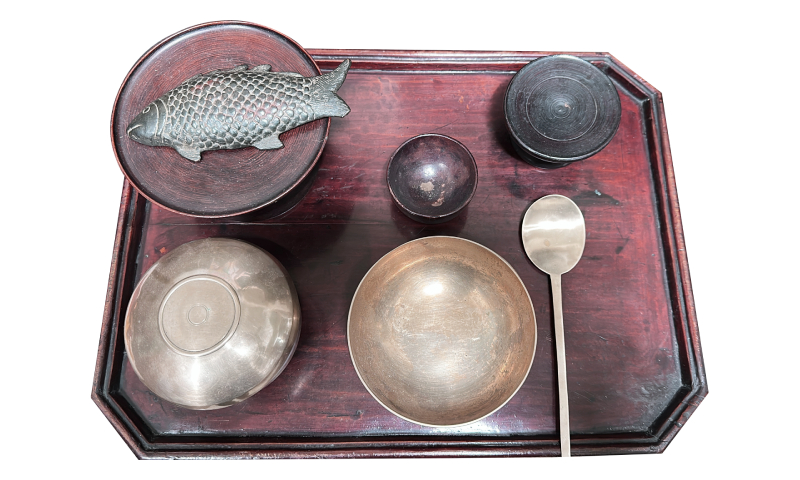
For years, one object has held the very top place on my wishlist. To find it, I visited the Dapsimni Antique Market. Lately, Korean antiques seem to be drawing renewed attention. Yet, I cannot help but feel uneasy about the speed at which trends rise and vanish. The word “trend” carries a certain blindness.
However, objects with real stories do not disappear. Like the soban, they return after the tide recedes—no longer as trends, but as classics. That is why I choose to study and record them: to hold on to what retains its original luster beneath shallow currents.
What I seek is a small wooden soban from the Joseon Dynasty, bearing the soft patina of time. Barely thirty centimeters wide, yet now commanding over a thousand dollars. But the price does not define it. Indeed, it is not merely aged wood—it is a structure crafted by an artisan who labored over the dignity of a single meal.
Consequently, I am not searching for an old object alone, but for the landscape of life that gave birth to it. The question naturally shifts from “What kind of soban?” to “Why did we use one?”
Traditional Korean dining was centered on individual tables. Specifically, Confucian values influenced domestic order, and the practice of receiving one’s own table became deeply rooted. Practically speaking, food had to travel from distant kitchens to heated ondol rooms, making lightweight, portable tables essential. Furthermore, after meals, the soban could simply be leaned against a wall—an embodiment of spatial flexibility in Korean homes.
In short, a soban is not merely a surface. It is engineering fused with aesthetics.
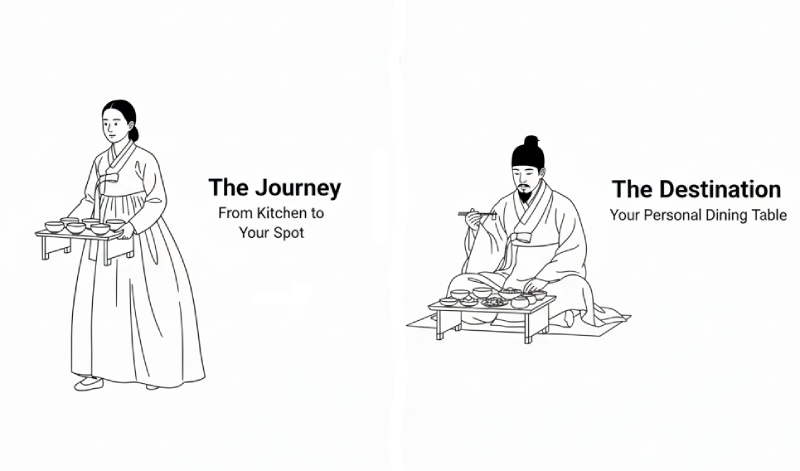
Form and Purpose: Silhouettes of the Soban
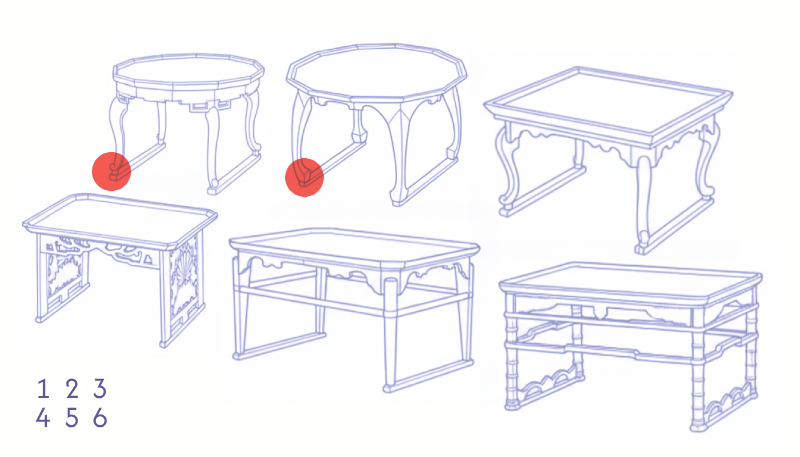
- 1. Hojokban (Tiger-leg Table)
Thick at the top and flaring outward toward the bottom, its legs express dignity and composure, favored by the nobility. - 2. Gae-dari Soban (Dog-leg Table)
With inward-curving legs resembling a dog’s hind legs, it carries a humble yet dynamic silhouette, widely used among commoners. - 3. Gim-sang (Seasoning Table): A specialized workstation characterized by its high, raised rims (Byeonjuk). It is the essence of practical aesthetics, meticulously designed to prevent oil and salt from scattering while seasoning dried seaweed.
Three Representative Regional Types
- 4. Haejuban
Supported by wide side panels instead of four legs, intricately pierced with motifs such as peonies or lotuses—an elegant and delicate expression of craftsmanship. - 5. Najuban
Celebrated for simplicity and durability, it emphasizes natural wood grain. Its separately fitted raised rim prevents warping with architectural precision. - 6. Tongyeongban
Carved from a single block for the top and rim, reinforced by horizontal stretchers, often adorned with mother-of-pearl inlay—both structurally sound and visually refined.
Values Embedded in Structure
- Wood Selection: Lightweight woods for the top, sturdy zelkova for the legs to lower the center of gravity.
- Natural Lacquer: Multiple coats protected against heat and moisture.
- Joinery Without Nails: Interlocking techniques ensured longevity across centuries.
The Moment of Encounter
In photographs, a soban may seem modest—almost understated. But standing before an original piece is a different experience altogether. There is an inexplicable depth: the grounded weight of its proportions, the quiet sheen shaped by time, the density of the grain beneath your fingertips. One instinctively pauses.
You, too, would inevitably be drawn in by that depth.
While Western furniture evolved toward grandeur and social gathering, the soban deepened through restraint and utility. Trends surge and fade like waves, but a soban—bearing the touch of its maker and the imprint of time—remains. That is why I continue my search.
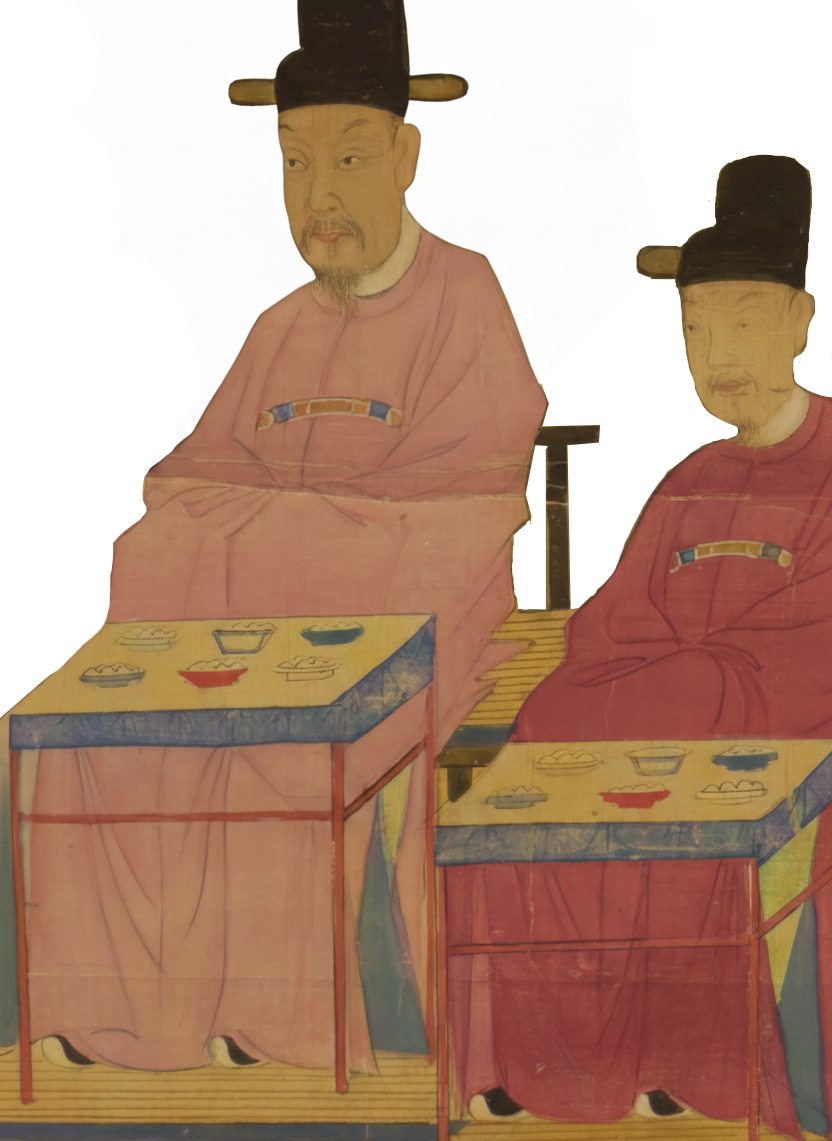
Traditional folk paintings often reveal tall tables reminiscent of Western styles. Rather than direct imports, these were ceremonial pieces influenced by Qing Dynasty China—exclusive luxuries for royalty and high officials. In a strictly floor-seated society, these towering silhouettes served as both a visual barrier of rank and a symbol of exotic sophistication.
To fully appreciate the minimalist beauty of Soban, I highly recommend visiting the Woodworking Crafts Gallery on the 3rd floor of the National Museum of Korea. It is a rare opportunity to witness how these timeless masterpieces harmonize with the surrounding space. ➔ ➔