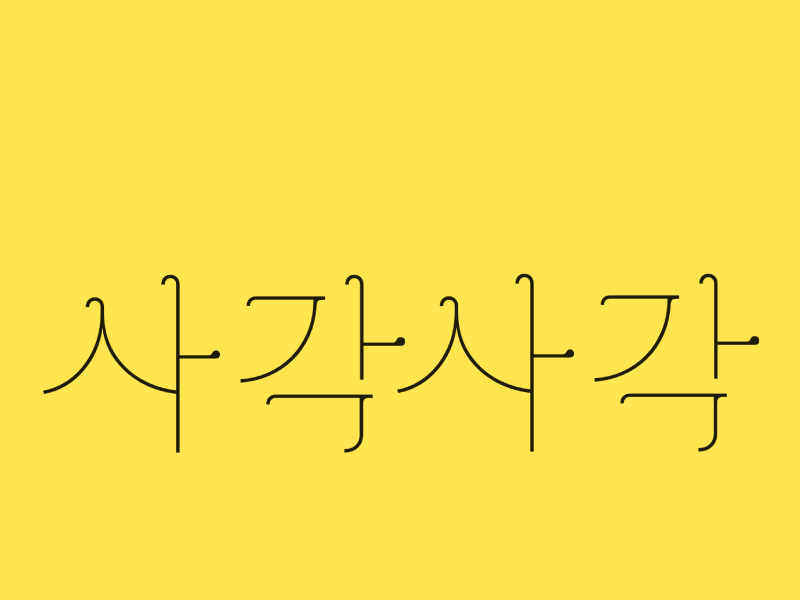
Sagak-sagak (사각사각): A Korean onomatopoeia for the rhythmic sound of light friction, such as slicing a crisp apple, writing with a pencil on paper, or treading on firm snow.
The Scritch-Scritch Sound
Scritch, scritch.
Is it the sound of an apple being peeled, or the soft friction of a pencil moving across paper? The two sounds are strangely alike. In Korean, the word ‘sagak-sagak’ captures both sensations at once.
Walking through the narrow streets of Seongsu-dong, I stepped into a stationery shop called Point of View Seoul. The moment the glass door closed behind me, the air seemed to change. The place felt less like a store and more like a quiet chamber of thought. Paper grain, the scent of ink, the cool metallic touch of pen nibs—everything coexisted in a calm, deliberate arrangement. For a moment, the coordinates of ordinary reality softened, as if I had slipped into another world, much like Alice following a rabbit into a different realm.
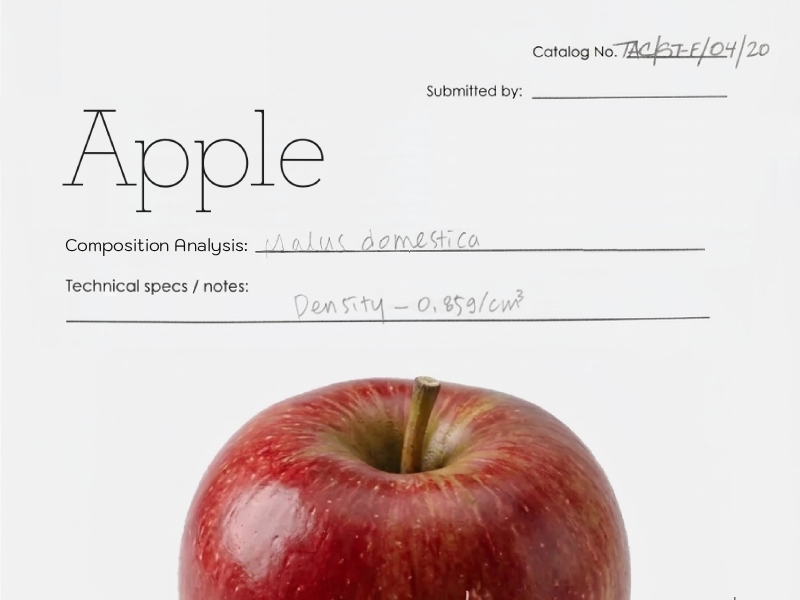
As I wandered along the displays, I noticed a curious motif. The conceptual inspiration for the space comes from the apples painted by Paul Cézanne. At first the choice feels decorative, almost whimsical. But the more one considers it, the more symbolic it becomes.
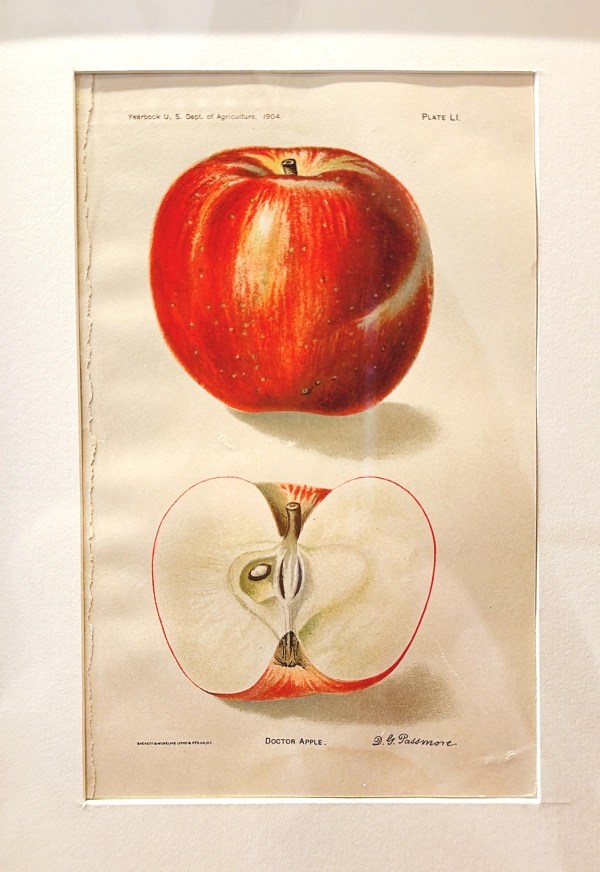
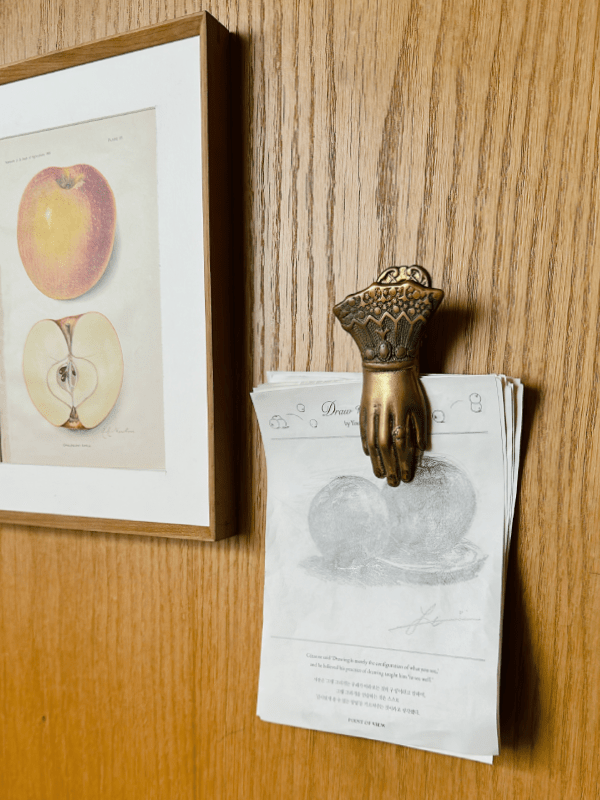
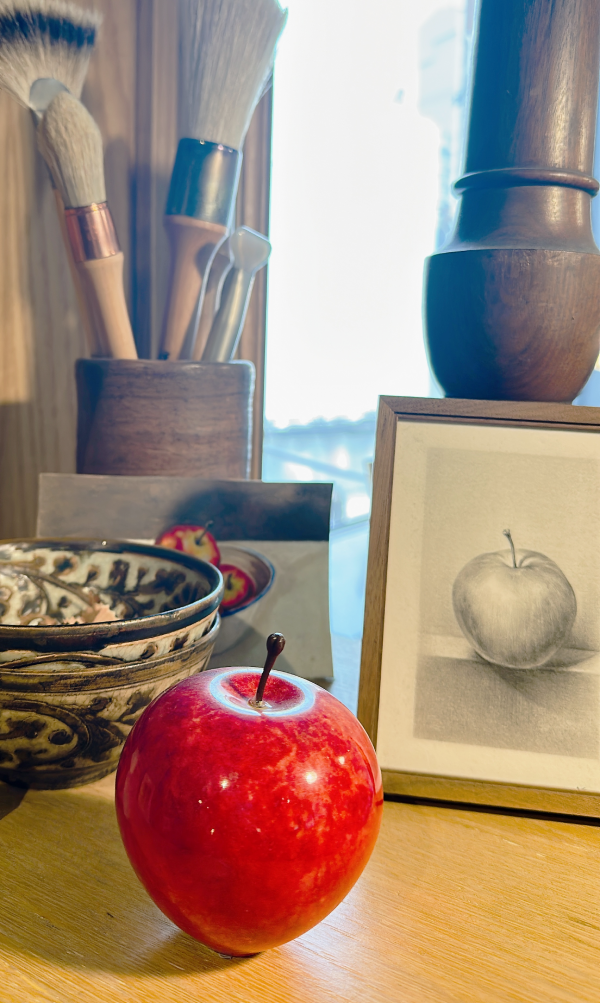

Throughout history, apples have often appeared at moments of transformation. They are rarely just fruit. Instead, they seem to embody curiosity, transgression, and the moment when human perception shifts toward something new.
The First Apple: A Choice for Knowledge (Eden)
Perhaps the earliest of these apples appears in the Book of Genesis. Strictly speaking, the biblical text never identifies the forbidden fruit as an apple. It simply refers to “the fruit of the tree of knowledge of good and evil.” Yet in medieval Latin, the word malum means both “evil” and “apple,” and over time the fruit in Western art and imagination took on the form of an apple. In that way, the apple came to symbolize the human decision to reach for knowledge, even at the cost of innocence.
The Second Apple: A Quest for Reason (Science)
A second apple appears in the history of science. According to a well-known story, Isaac Newton began to think about gravity after watching an apple fall in a garden. The anecdote was ecorded by his friend William Stukeley. Whether or not the apple actually struck his head is beside the point. What matters is that an orlater rdinary moment in nature sparked a question about the invisible forces shaping the universe.
The Third Apple: A Shift in Perception (Cézanne)
The third apple belongs to the history of painting: Cézanne’s apple. Unlike earlier painters who sought to reproduce the smooth appearance of fruit, Cézanne was interested in something deeper. He tried to understand the structural essence of objects—reducing forms to spheres, cylinders, and cones. His friend Joachim Gasquet once recalled Cézanne saying, “I want to astonish Paris with an apple.” It was less a boast than a declaration of intent: a determination to rethink how we see.
In Cézanne’s still lifes, tables tilt slightly and apples seem subtly displaced. The scene is not painted from a single viewpoint but from several perspectives combined. This way of seeing would lat
er influence the development of Cubism, led by artists such as Pablo Picasso, and would ultimately reshape the visual language of modern art.
The Final Apple: The Tool for Creativity (Innovation)
In the modern era, another apple appears—this time as a logo. The technology company Apple adopted the image of a bitten apple as its emblem. Founded by Steve Jobs and his collaborators, the company set out to build tools that would expand human creativity. Over time, the symbol has come to represent knowledge, innovation, and the imagination that drives technological change.
The Next Apple is Waiting
Standing again among the shelves of notebooks and pens in the stationery shop, I look around quietly. Someone will come here to write an idea down. Someone else will sketch a design, or begin a story that does not yet exist.
Scritch, scritch.
It might be the sound of an apple being peeled. Or the sound of a pencil moving across paper. But perhaps they are, in the end, the same sound—the sound a thought makes when it begins.
But the story of the apple doesn’t end here.
If the first apple gave us will, the second gave us law, and the third gave us a new way to see, what will the next apple be? Perhaps it is already here, hidden in a line of code, an ethical choice in a digital world, or a sustainable seed planted for a future we can only begin to imagine.The next inflection point of humanity is always just one “bite” away. And in the quiet corners of places like Seongsu-dong, we are still listening for that next subtle scritch—the sound of a new world being born.
Explore my personal archive of paper collecting, where every sheet captures a moment in time and a piece of my creative soul.
[Private Curation: A Journey Through Collected Paper] ➔ ➔