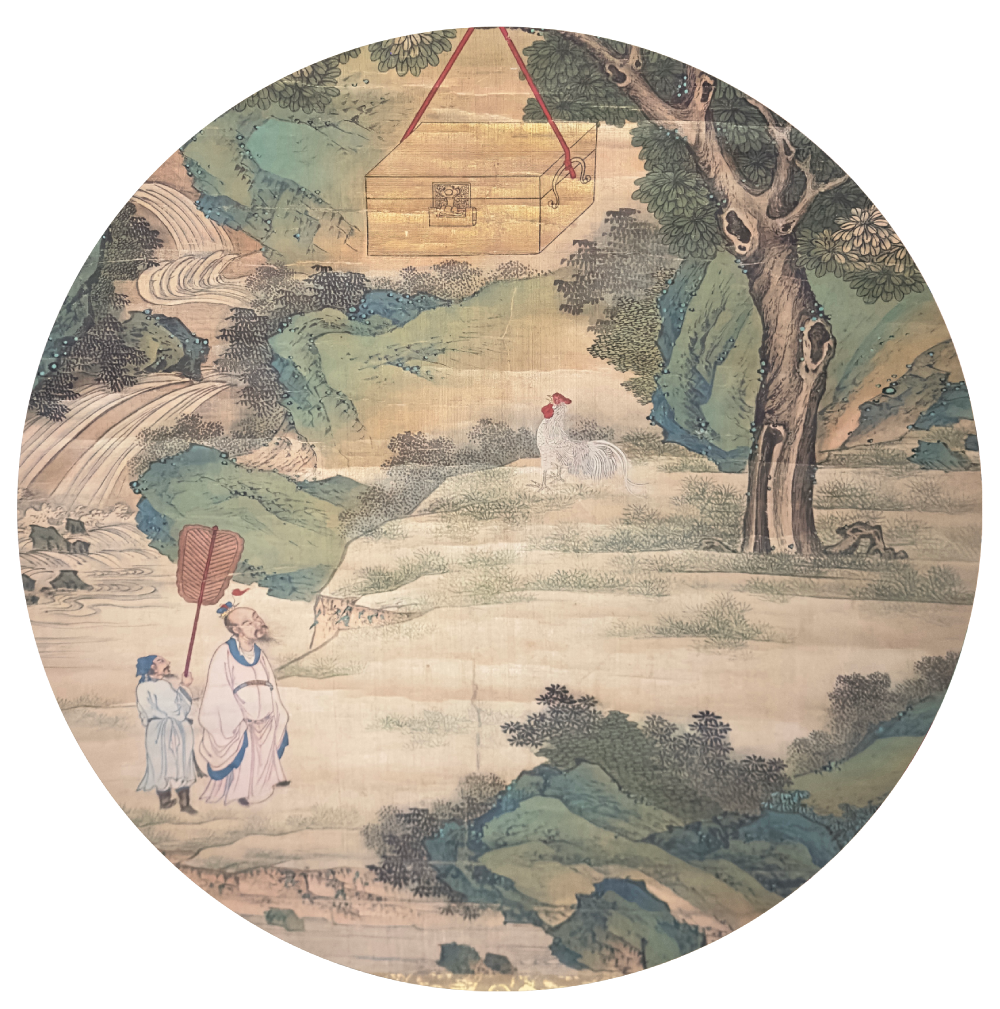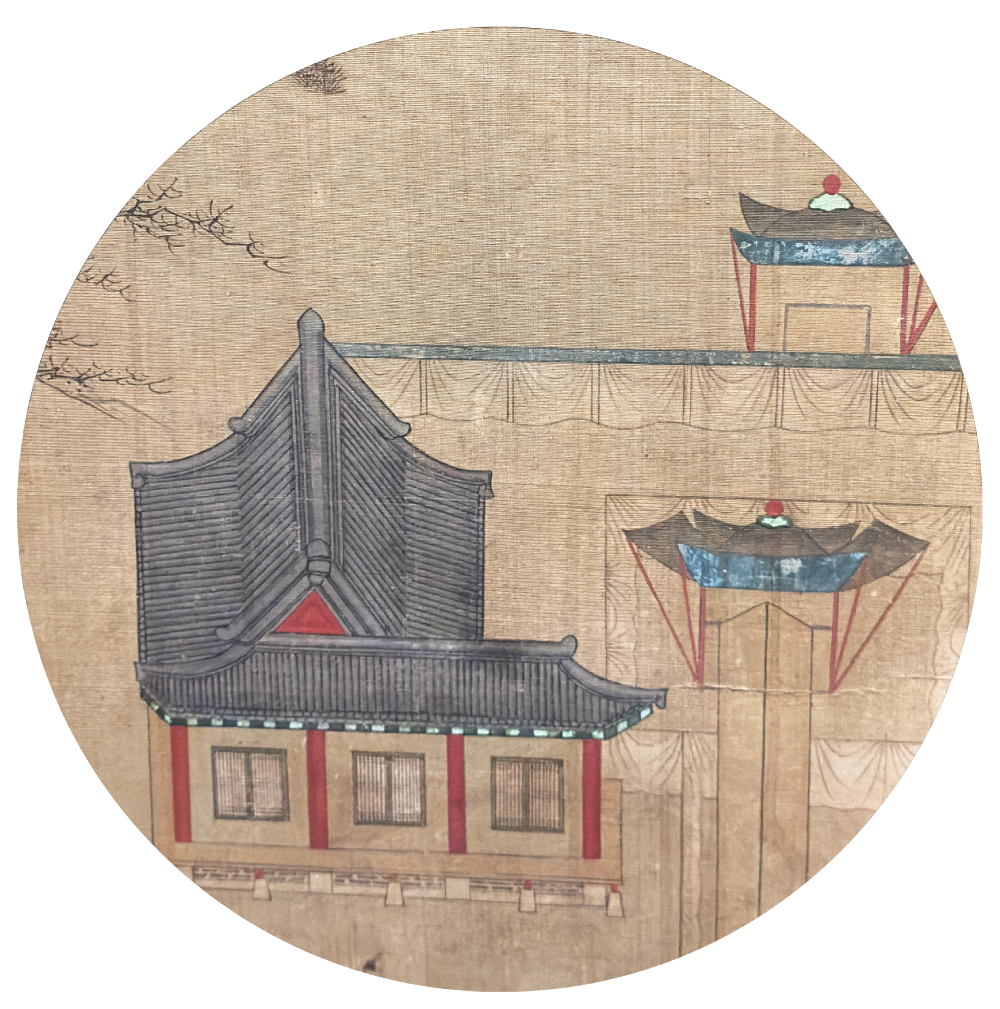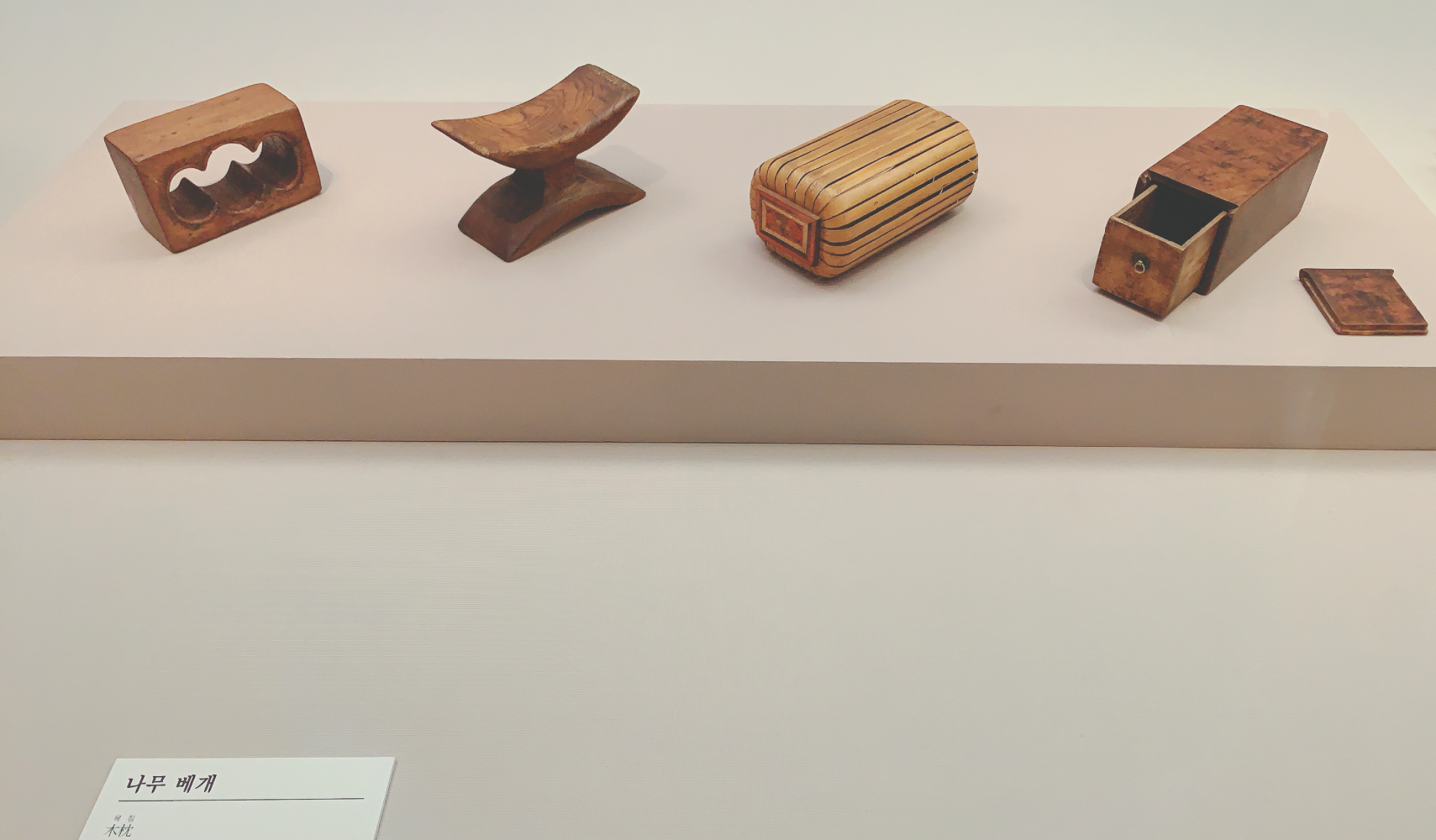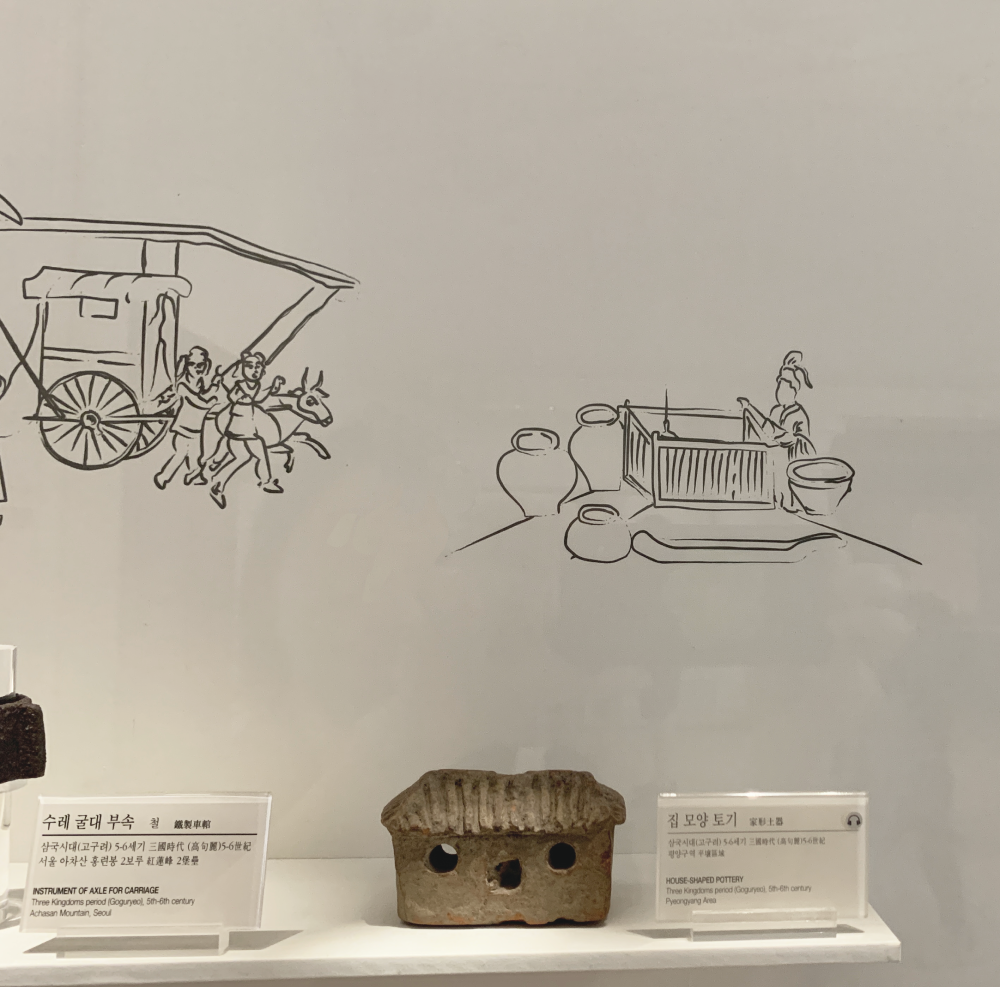
Welcome to Every Three PM

Category: Design & Culture

  • The Endless Banchan: How Many Side Dishes Truly Make a Korean Table?

    The Endless Banchan: How Many Side Dishes Truly Make a Korean Table?

    The Legacy of the Banchan Battle: My Mother’s Generation

    In my mother’s generation, preparing new Banchan (side dishes) for three meals a day was the norm. If not freshly made, there was always a backup of staple, long-lasting Banchan neatly waiting in the fridge. The main dish changed daily, depending on the season or a special occasion.

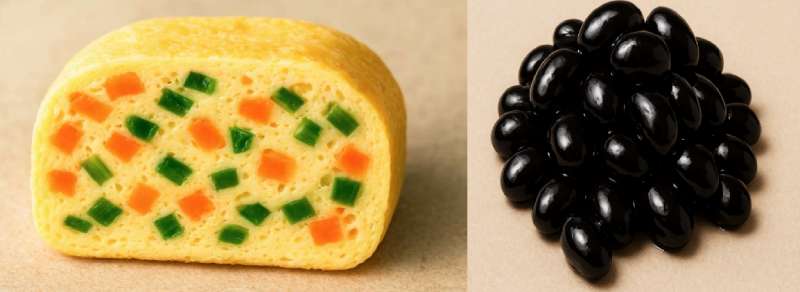
    My favorites were always Mom’s homemade Tonkatsu, where she meticulously grated the breadcrumbs herself before frying, and grilled fish like Gulbi. Her Gyeran-mari (rolled omelet) was never simple; she always diced vegetables and cheese to make it colorful and vibrant.I realize now that even seemingly simple side dishes required significant effort in the process and ingredients. Indeed, it took me years to truly understand the immense devotion behind it all. I am deeply regretful for the times I was picky about banchan—what we call ‘Banchan-tujeong’…

    Egg rolls and soy-glazed black beans were staple side dishes — both served as my go-to sources of protein.

    My Modern, Minimalist Korean Table

    Today, I choose to let go of the rigid expectations for my own meals. I no longer feel the need for a mandatory soup or obligatory kimchi, unlike many who still consider these essential. While my mother diligently prepared lavish meals (and even had to pack lunch and dinner for my school days—but let’s save the Dosirak story for later!), my approach is different. Although the count of dishes on my table is humble, I focus on making each plate generous and visually appealing. This is my way of ensuring a balance of the five major nutrients. That should be enough, shouldn’t it?

    Tradition: Banchan Count as a Symbol of Status

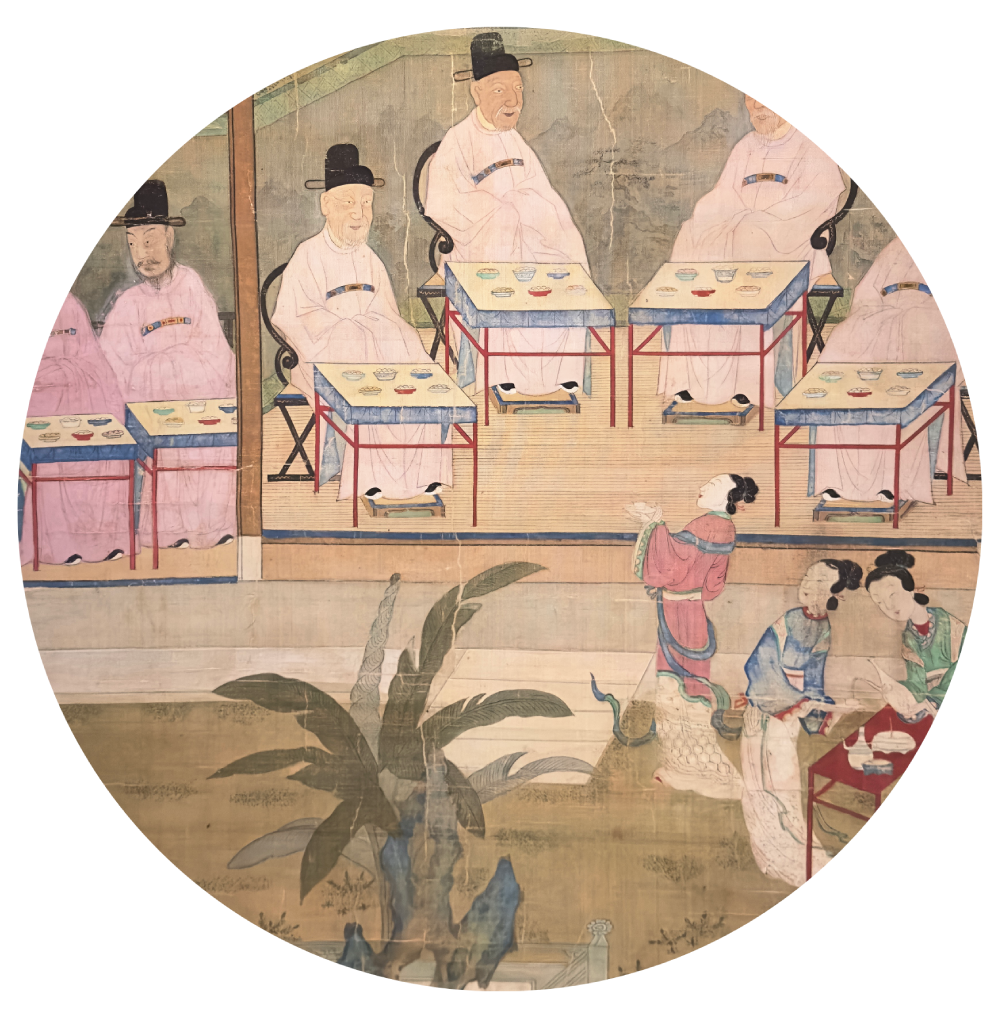
    In Korea, a meal is centered around rice (bap), accompanied by soup or stew, and basic side dishes like Kimchi or Jangajji (pickles). Historically, the number of side dishes served, known as ‘Cheop’ (첩), signified a family’s wealth and social status.

    • 3-Cheop: The table setting of commoners.
    • 5, 7, or 9-Cheop: The number increased according to social standing.

    12-Cheop: Reserved exclusively for the royal court, symbolizing the ultimate power and hierarchy of the monarchy.

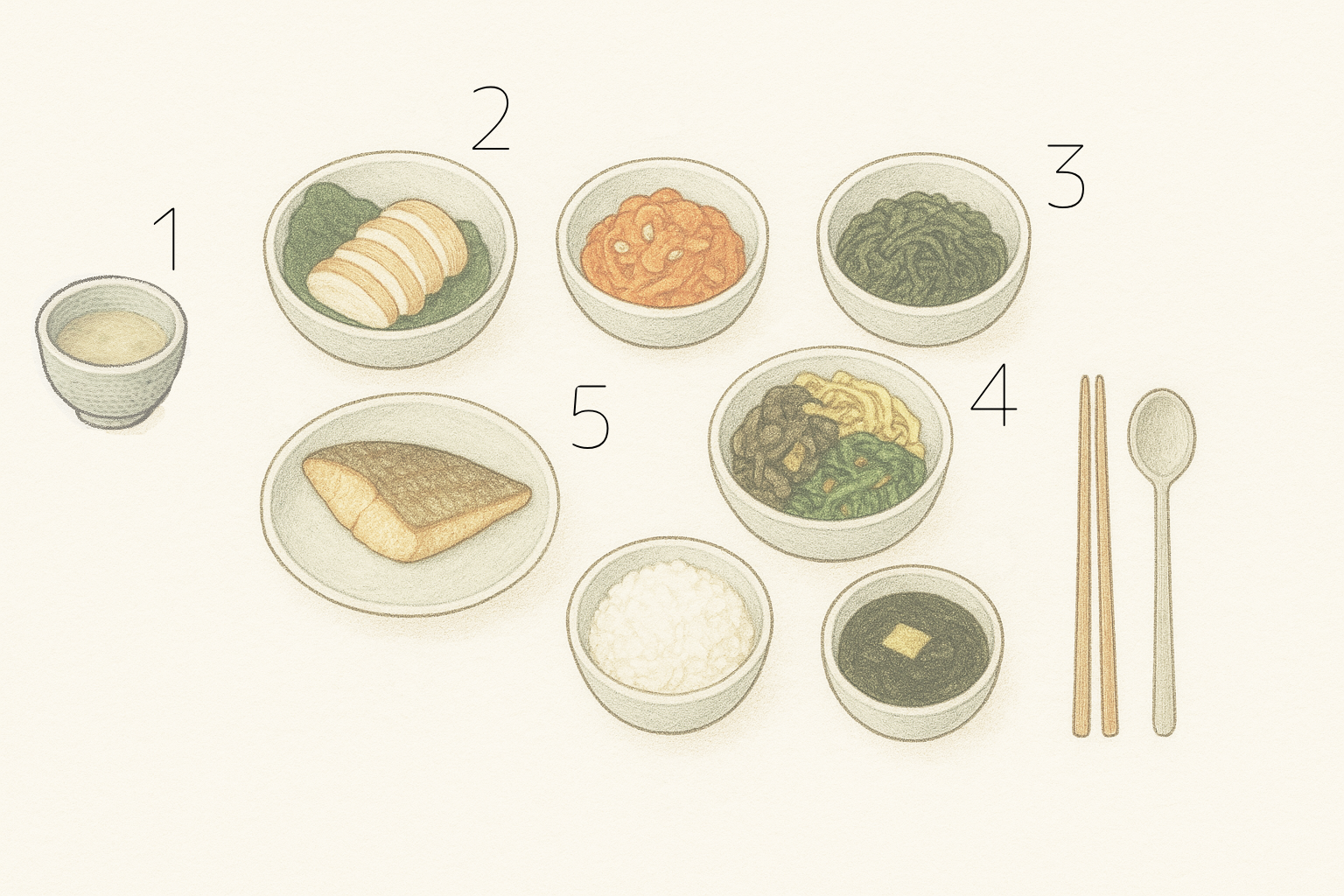
    Understanding the 5-Cheop Bansang (오첩반상)

    The 5-Cheop Bansang was a table setting used by affluent Banga (noble families). Above all, it was crucial that the five side dishes were diverse in ingredients and cooking methods, ensuring harmony with the rice.

    This traditional format includes:

    • Rice (Bap)
    • Soup/Stew (Guk or Jjigae)
    • Kimchi (essential)
    • Five Side Dishes (e.g., seasoned vegetables, grilled, braised, battered/fried, and preserved banchan).

    Aesthetics also played a major role. Dishes like Samsek-namul (three-color seasoned vegetables – spinach, bellflower root, bracken) were important for their contrasting colors. Even simple Korean pancakes (Jeon) were garnished with red chili or mugwort to brighten the plate. The overall goal was a colorful harmony: the clean white rice, the clear soup, and the vivid reds, greens, and yellows of the various Banchan.

    Therefore, it is because I am theoretically aware of this tradition that I cannot help but cheer like a king when I occasionally visit a Korean full-course restaurant and see a table so overloaded with dishes that the legs of the table threaten to snap. Even if at home, my own meals rarely reach the 3-Cheop mark…

  • Doljabi: The Korean First Birthday Ritual of Fortune

    Doljabi: The Korean First Birthday Ritual of Fortune

    Doljabi is more than just a game; it is a profound Korean first birthday ritual.

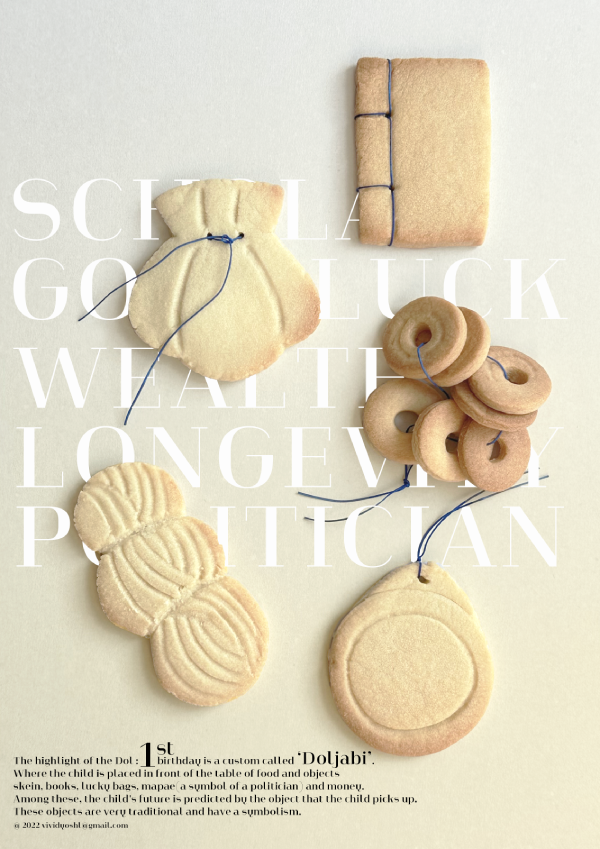
    Doljabi is more than just a game; it is, in fact, a profound Korean first birthday ritual. In old Korea, the survival rate of infants was low. Therefore, making it to the first birthday (Dol) was a massive achievement—a true milestone that called for a huge celebration. Furthermore, this tradition wasn’t just about sharing cake; it was a powerful ritual to celebrate survival, announce the child’s triumph over past difficulties, and pray for their future health and destiny.

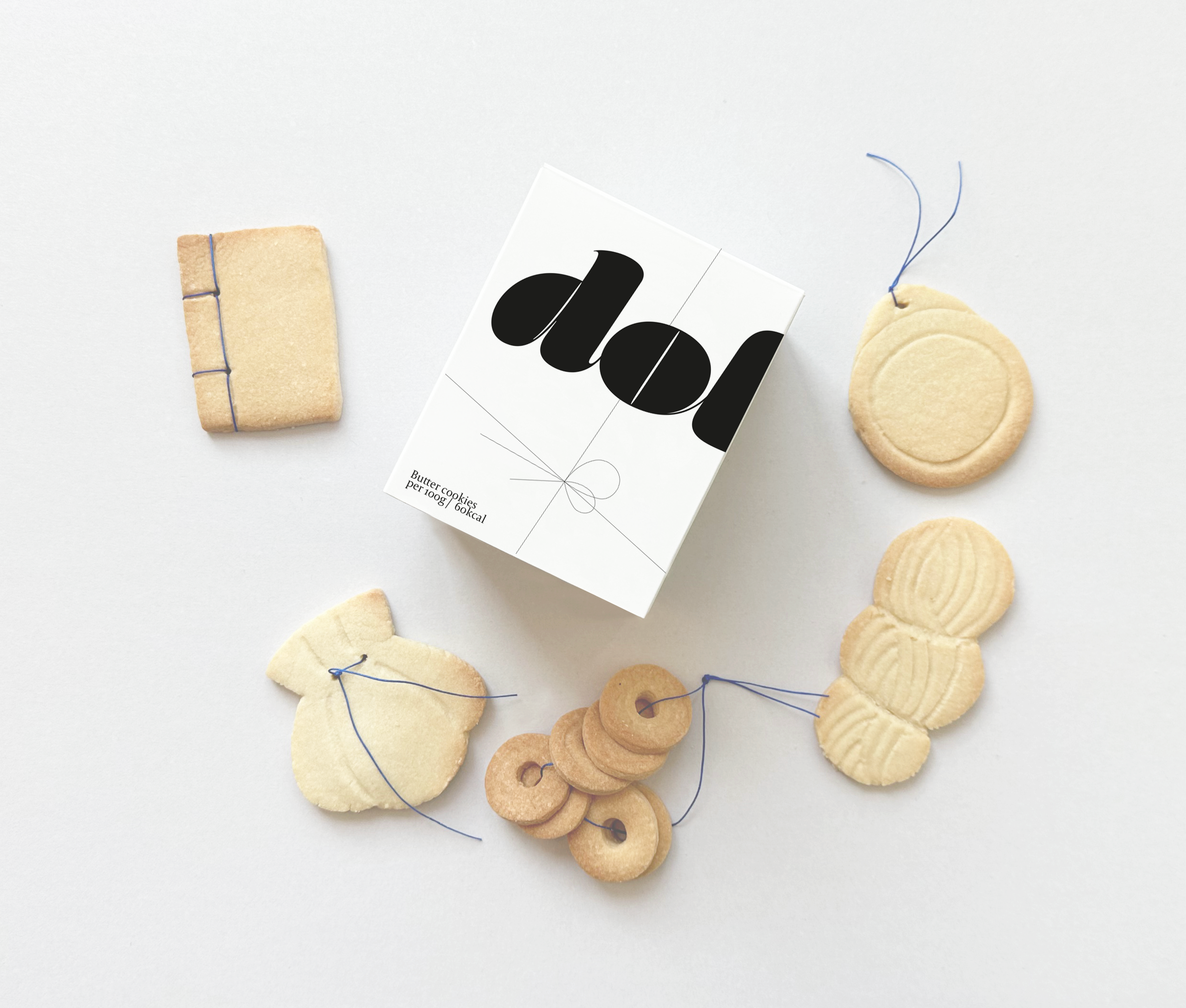
    Typically, parents prepare gifts… They want the cookies to evoke pleasant memories of the day.

    The Heart of the Party: Doljabi

    The best part of the whole celebration is definitely the ‘Doljabi.’ I know, the idea of a tiny hand picking their life path sounds super intense, right? But here’s the secret: Doljabi was never about sealing their fate. It was a super heartfelt wish from the whole family. They’d put out cool stuff symbolizing long life, smarts, wealth, and all-around happiness, and just watch and hope the baby would touch one. It wasn’t about the result; it was totally about the good vibes and deep love they were sending out.

    GeneratedByAI

    What Happens During Doljabi

    At a Doljabi, a few special items are laid out on a table, and the baby gets to grab one—no help allowed! Each item has its own meaning: a brush symbolizes a scholar, money signifies wealth, and a skein of cotton yarn stands for a long, healthy life. Traditionally, people believed that the baby’s choice could foretell their future path.

    *Doljanchi & Doljabi

    How Doljabi Items Have Changed Over Time

    The stuff on the Doljabi table has changed with the times, showing what people valued most. Here’s a quick peek at the symbols:

    The items on the Doljabi table have evolved with the times, mirroring what society values most. While traditional Doljabi items symbolized abstract and fundamental wishes like health and wisdom, modern ones explicitly point to specific career paths, leaving much to be desired. There are thousands, even tens of thousands, of paths in this world. However, seeing a child’s infinite potential reduced to a mere handful of ‘stable professions’ on the Doljabi table is disheartening. It feels like facing the anxious cross-section of our society, where diversity has faded and survival has become the priority.

    Yet, amidst these changes, remember that it’s not really about the objects themselves. It’s all about the parents’ huge hopes! Picking the yarn isn’t just holding thread; it’s saying, ‘Live a long, long life!’ And the money or rice? It’s simply wishing for them to be comfortable and well-fed forever.

    The True Value: A Random Pick, an Endless Wish

    These days, Doljabi is a super fun, picture-perfect moment for families.
    Sure, parents still grin when the baby grabs a judge’s gavel or a stethoscope—but the meaning is much more relaxed now. Doljabi isn’t some serious, fate-determining moment anymore. It’s a beautiful tradition that reflects a family’s deep love and support. It celebrates the baby’s health and happiness—whatever path they choose later. No matter what the baby grabs, the parents’ message is always the same:

    “Whatever life you choose, we’ve totally got your back.”

    And that’s exactly why this timeless Korean tradition continues to warm hearts today.

    So… What Did I Pick?

    I know, it sounds like a cliché ending—but yes, I picked up a brush!
    My parents might have secretly hoped I’d go for money or books instead, but… well, here we are.
    Turns out, I actually ended up in a career where I hold a brush (well, a stylus now)—so maybe there’s some truth to it after all!


    Read more : https://everythreepm.com/diy-dol-party-favors/

  • National Museum of Korea UX Yeobaek | Design & Slow UX

    National Museum of Korea UX Yeobaek | Design & Slow UX

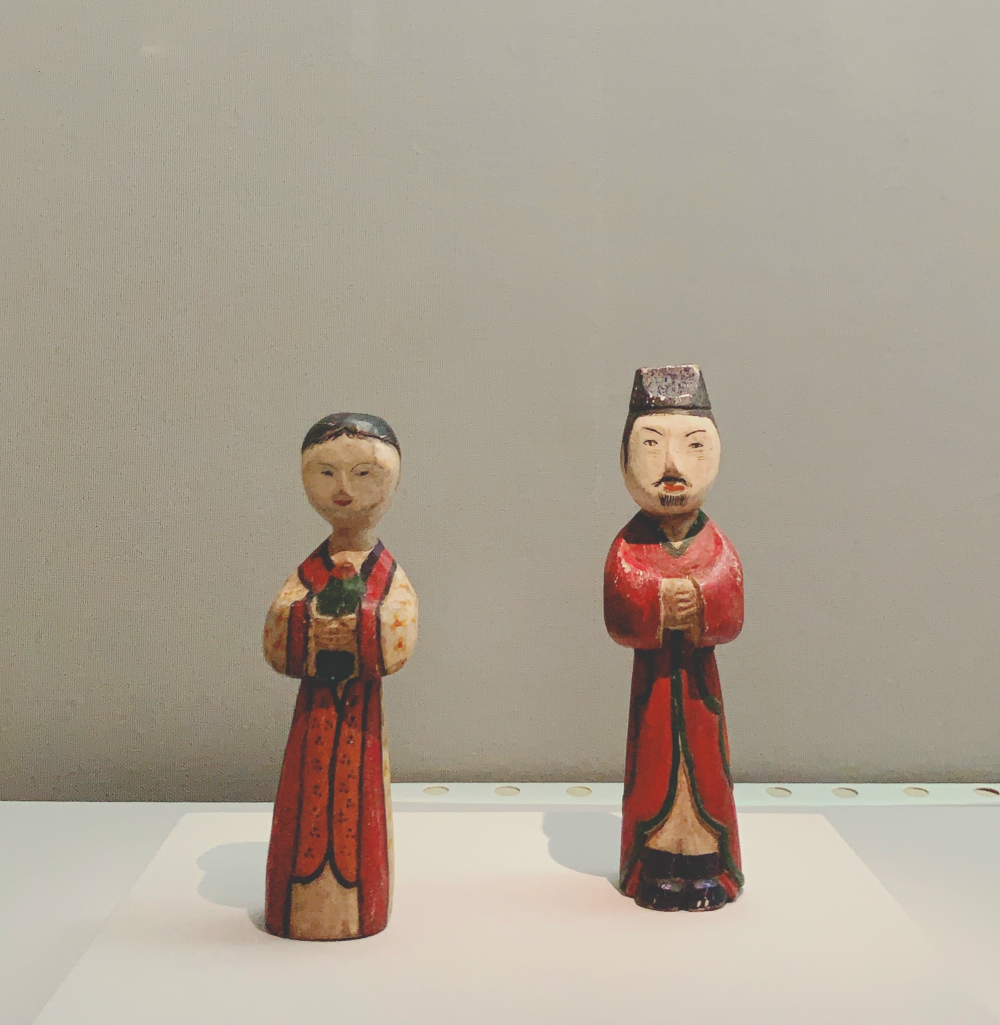
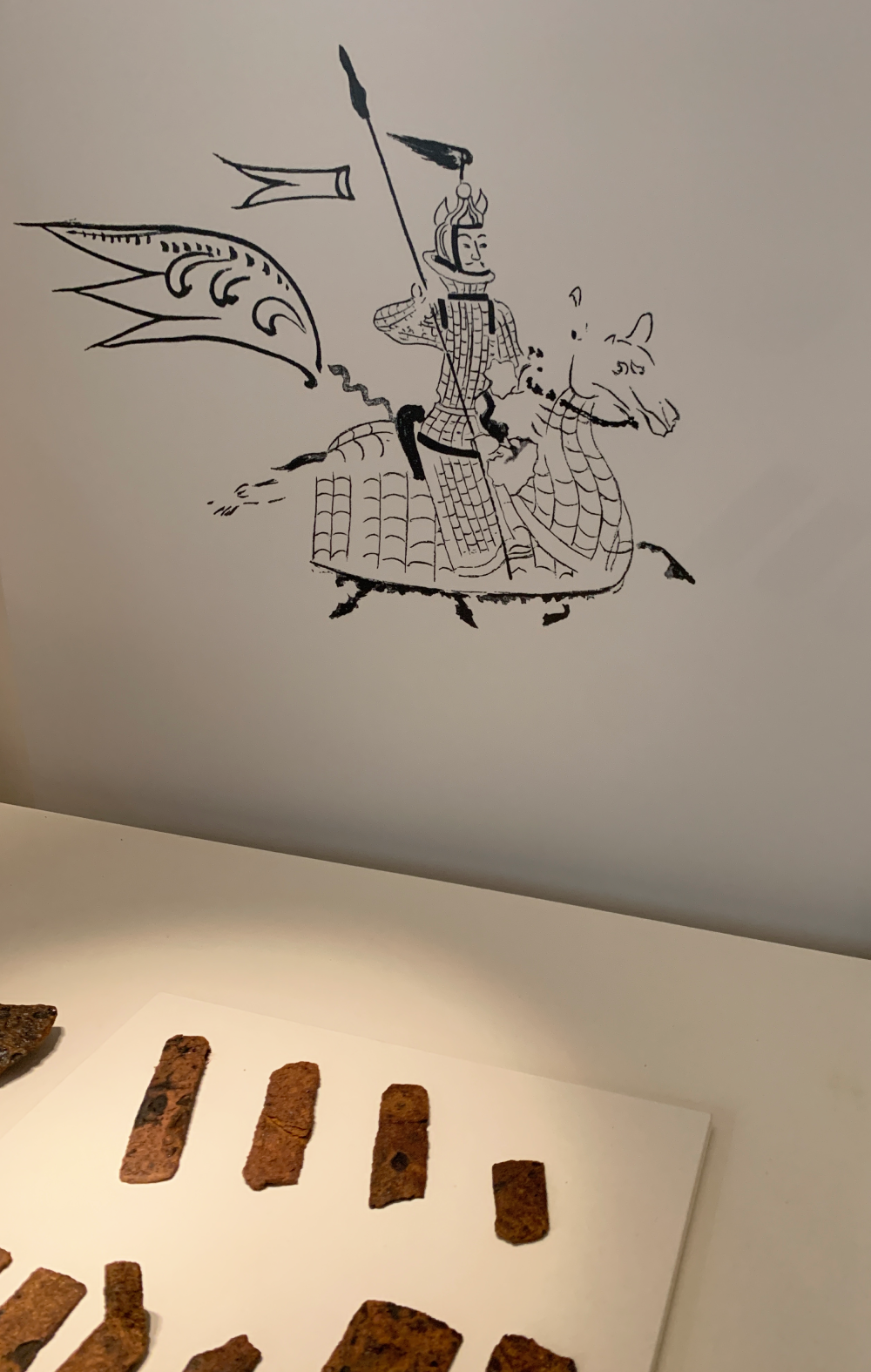
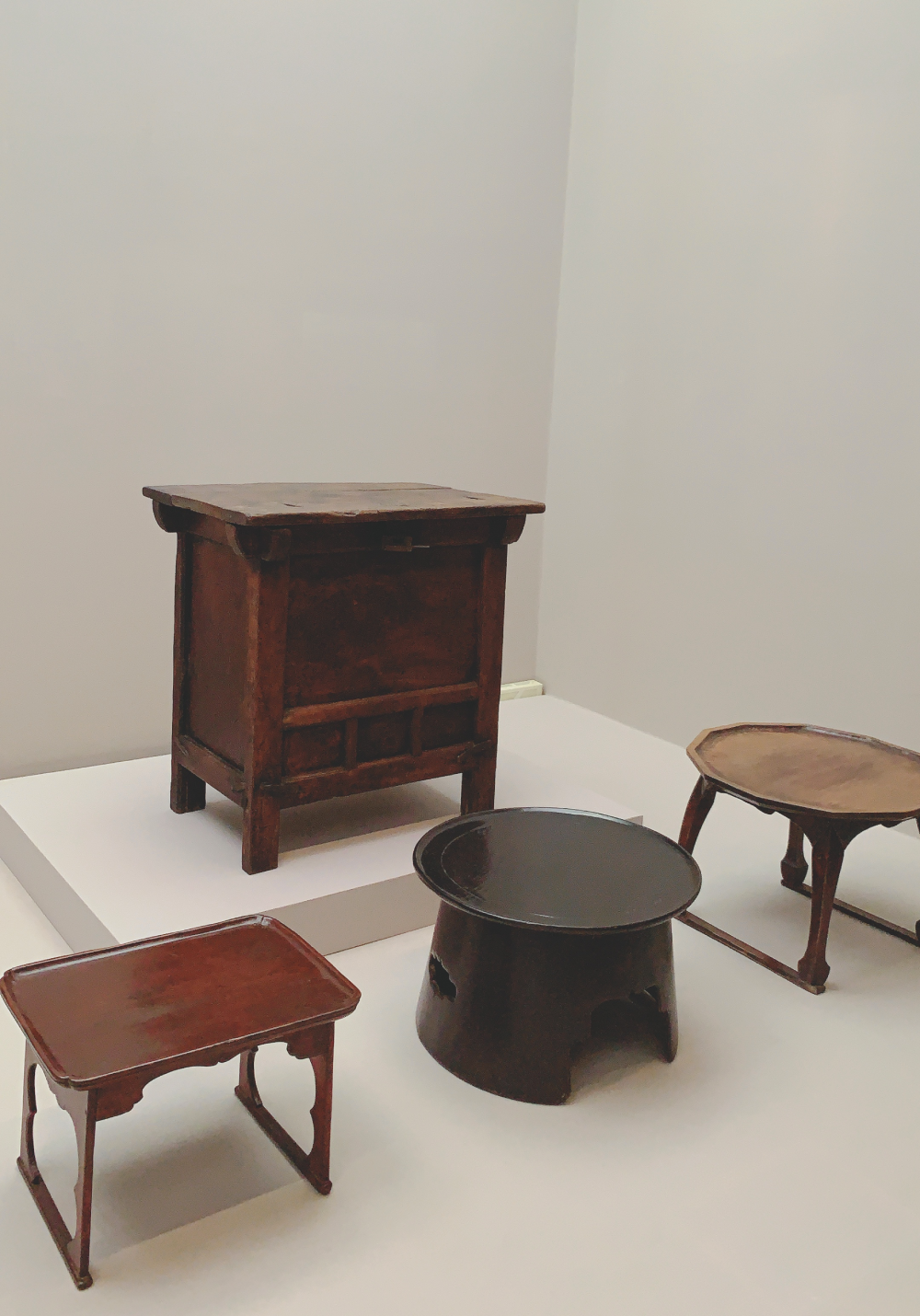
    This is my favorite space in Seoul—a place that continuously gives without demanding anything in return. It’s where I find inspiration, tranquility, and deep comfort amidst the echoes of the past. Let me begin my story about the National Museum of Korea.

    1. The Design Solution to Overcoming ‘Scale Pressure’

    As the largest museum in South Korea and one of the top five worldwide in terms of annual visitors, the museum houses an immense collection of approximately 400,000 artifacts. Even after multiple visits, one cannot claim to have seen it all. I deeply sympathize with tourists who often rush through massive museums abroad in just a few hours, ending up with nothing but visitor fatigue. This platform is vast and poses a real risk of Information Overload for visitors. Yet, I dare to suggest: “Don’t try to conquer this giant space. Don’t rush to absorb the long history of Korea in one breath. Instead, enjoy it freely and leisurely, even if you only focus on one era or one artifact.” This is the ‘Slow UX’ experience that the museum subtly offers as an unspoken message.

    2. The Aesthetics of Yeobaek: Unforced ‘Visitor Flow UX’

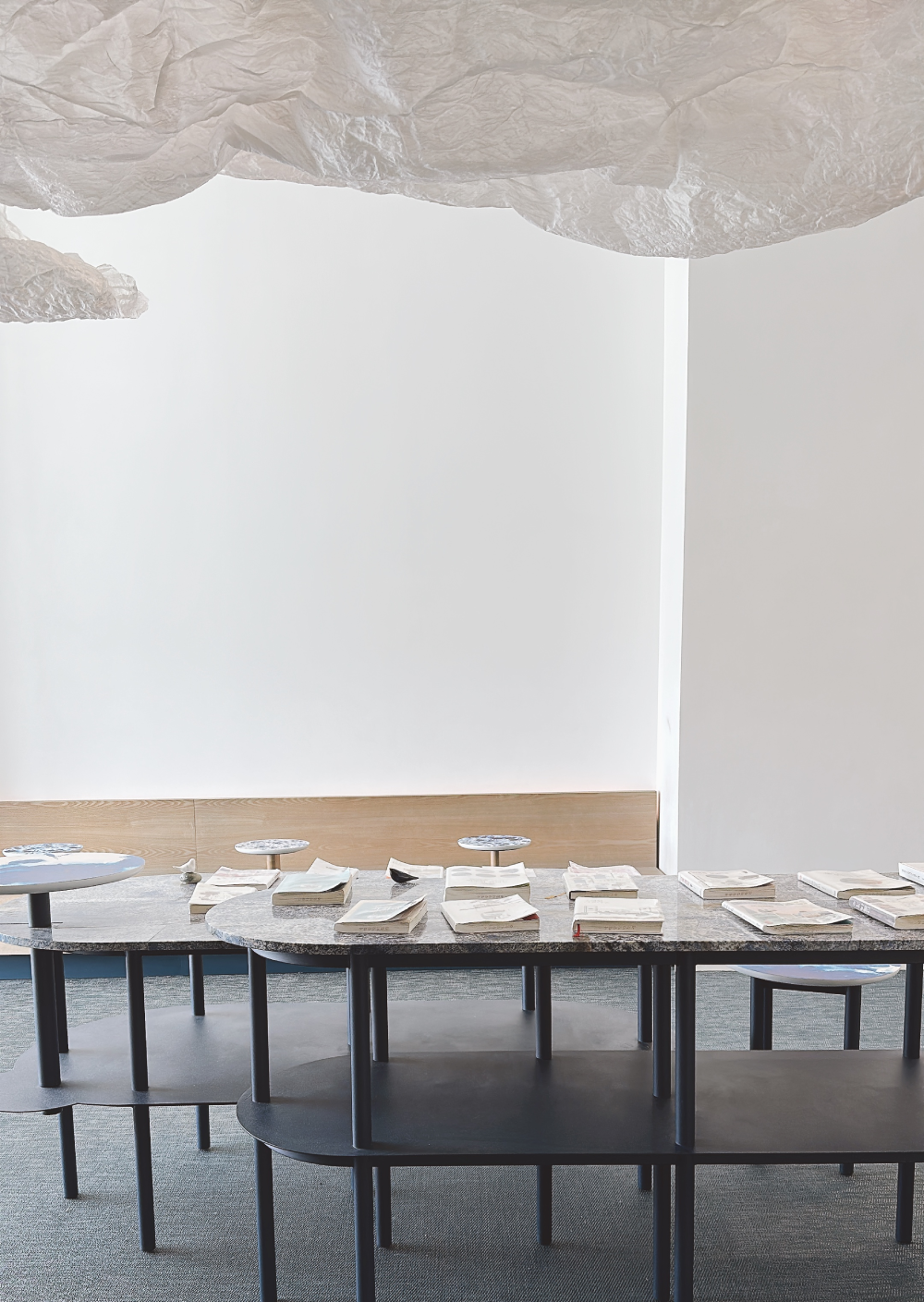
    The most exceptional aspect of this museum is its commitment to the Korean aesthetic concept of Yeobaek (The Beauty of Empty Space) in its spatial utilization. The design never compels the visitor’s focus; rather, it expertly orchestrates a rhythm of intense focus followed by rest within the empty spaces.

    It is this Yeobaek that enables the free-flowing ‘Zoom In/Zoom Out’ viewing experience:

    A tiny fragment of a greater whole.
    Step closer, and you’ll find intriguing moments hidden in the details.
    Stories the big picture can’t show from afar.
    • Zoom Out (Macro View): The wide halls and pathways expand the sightline, allowing visitors to survey the overall arrangement of the artifacts and the spatial structure. This acts like a ‘Pause’ button for immediate rest.
    • Zoom In (Micro View): It provides the opportunity to set aside detailed explanations for a moment and quietly, deeply observe the artifact’s texture, color, and the static environment surrounding it. This unforced spatial experience makes me eager to return again and again.
    Modest, practical, and quietly witty.

    3. Immersive Gateway Design: Connecting Digital and Past

    The Immersive Digital Gallery is a creative stage production that bridges the past and present. While historical stories might be grand, the artifacts themselves can appear simple in material and texture by modern standards. However, the digital presentation gently encourages our imagination.The digital elements do not compel you to read information glaringly. Instead, they capture the four seasons or the shifting time of a specific historical site, reproducing the past with familiar landscapes to richly satisfy the five senses. This maximization of visual presence is an excellent example of Immersive Experience Design that allows visitors to briefly walk through and observe that era, fostering empathy for our ancestors’ lives through a warm connection to our heritage.

    Here, digital media plays only a supporting role — it gently inspires imagination rather than leading the scene.

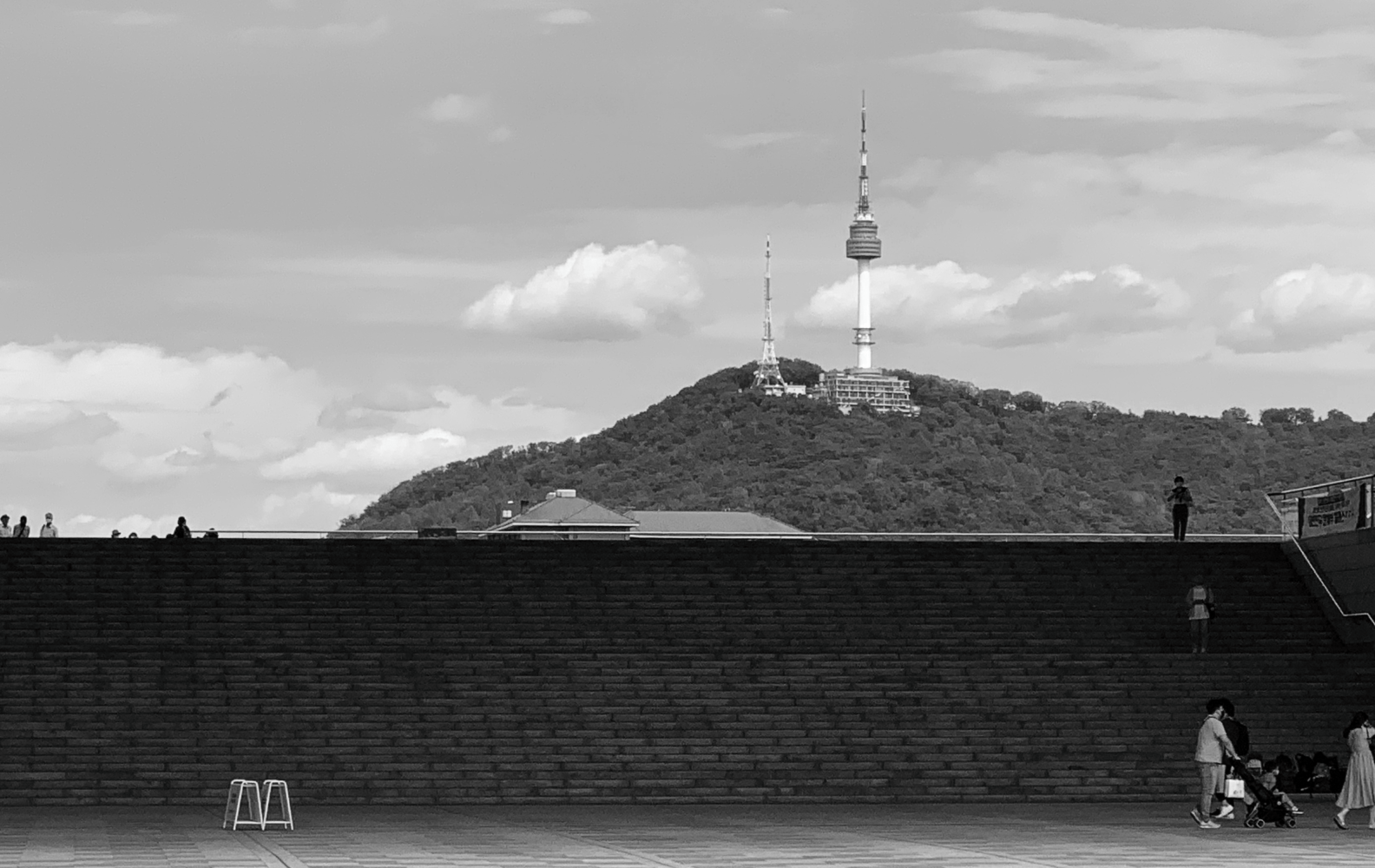
    4. Seamless Integration with Nature: Urban Solace

    After fully experiencing the indoor exhibits, it’s time to step outside. Ascending the stairs reveals a striking ‘Top View’ of Namsan, framed by a wide, open vista. You can catch your breath at the outdoor cafe, looking out over the expansive lawn and the goldfish in the pond. This design, which allows visitors to enjoy nature and gain psychological solace right in the heart of the city, is truly magnificent. If the resting spaces are crowded, don’t worry. The surrounding neighborhood of Ichon-dong is filled with stylish and delicious restaurants and cafes. The museum experience naturally extends into the local community’s delights.

    5. Experience Expansion: Selectable Add-on Modules

    The National Museum of Korea is more than just a history museum; it functions as a Cultural Platform. If your energy permits, you can broaden your experience through various ‘Add-on Modules’ like the nearby Children’s Museum or the National Hangeul Museum. The frequent special exhibitions featuring neighboring Asian countries also offer a fascinating opportunity to compare the similarities and differences within Asian cultures, thus expanding your cultural perspective.

    My little secret place.
    A window seat with a view of the wide courtyard — perfect for reading and daydreaming. Come and find it.

    6. The Noble Mission of the Donors

    This space is also a precious place where the contributions of many donors and patrons are recorded and displayed. I was quite surprised to find that a dedicated wing is filled with gifted artifacts. What kind of noble mission drives someone to painstakingly collect, preserve, and then donate these treasures? I applaud this profound gesture and convey my sincere gratitude.

    Practical Tips for Visiting the National Museum of Korea

    To help you maximize your visit to this magnificent Seoul landmark, here are a few practical tips:

    • Take Advantage of the English Guided Tour
    • Check the Night Schedule: For a more relaxed experience, note that the museum extends its hours on Wednesdays and Saturdays (usually until 9:00 PM). A sunset walk around the beautiful Mirror Pond and pagoda in the outdoor exhibition area is highly recommended.
    • Free Admission to Permanent Exhibits: The National Museum of Korea offers free admission to its permanent exhibitions, making it one of the best value cultural experiences in Seoul. (Note: Special exhibitions are typically ticketed.)

    For all details and references, please check the museum’s official website. ↗

  • Breaking the Old Rule: Time and Place Decide Food

    Breaking the Old Rule: Time and Place Decide Food

    My Unspoken Soul Food: Naengmyeon Never Made the Cut

    When I was little, I was a picky eater. If something smelled too strong or looked weird—nope, I wouldn’t touch it.

    Special occasions always had a predictable menu: Chinese food, pizza, Korean BBQ, or a buffet. The birthday person just picked one from that “holy list.”

    Whenever I think of those foods, the whole atmosphere of that time comes back to me—even though, honestly, none of them were really my favorites.

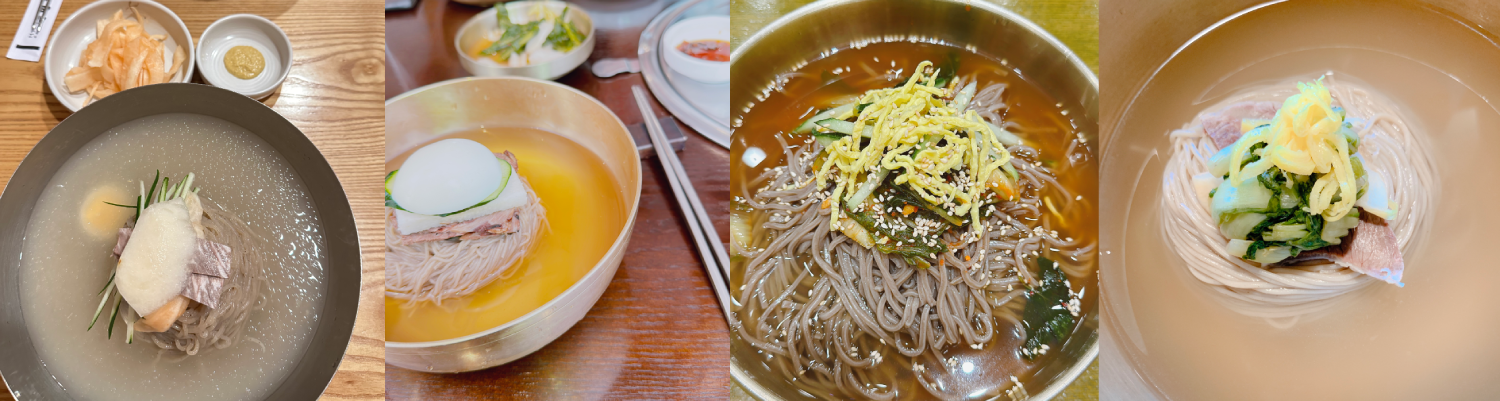
    As a kid, I once said I’d marry the owner of a cold noodle shop. That’s how much I loved naengmyeon (Korean cold noodles). But it never made the cut for family celebrations.

    Shattering the Rules: The Corporate Lunch That Redefined Special Occasion Food

    Since Korean graduations are in December, school starts in March, and my birthday is in winter, even if I’d chosen it, my family probably would have vetoed the idea. It wasn’t that my parents ignored my preferences—it was just that naengmyeon was strictly considered a “summer food.”

    It’s like how people eat galbitang (beef soup) at weddings or yukgaejang (spicy beef soup) at funerals—we had our own family “rules” about food and timing.

    Naengmyeon: My soul food, but bound by the summer rule.

    Then, something funny happened. After decades of following those rules, I completely broke them.

    It was during my corporate life. After a long meeting with software engineers, we all went to a restaurant famous for sundaeguk (Korean blood sausage soup). I had never tried it before—honestly, I had always found it kind of… intimidating. But I told myself, “This is what grown-ups do,” and just went along.

    Wow. That first spoonful changed everything. The broth was rich and deep, the chewy sundae and garlic chives mixed perfectly, and the combo with rice and kimchi? Unreal. I was shocked—and a little upset that I’d wasted thirty years of my life not knowing this taste.

    Maybe my taste buds had matured—or maybe I’d just officially become an “ajeossihttps://www.90daykorean.com/korean-honorifics/ (a middle-aged Korean guy who loves hearty soups). After all, sundaeguk and other hearty soups are stereotypically known as “hangover food for older men.”

    But now, I eat it on my birthday and even on Christmas. The funny thing is, I don’t eat it that often otherwise—it’s a bit too rich for everyday meals.

    Korean Office Worker Lunch Menu

    So, what do other office workers in Korea eat for lunch?

    Top 5 Lunch Menus for Korean Office Workers:

    • Korean set meals (baekban) — rice with several side dishes
    • Kimchi stew or soybean paste stew
    • Spicy stir-fried pork (jeyuk bokkeum)
    • Pork cutlet (donkatsu)
    • Noodle dishes (cold noodles, udon, pho, etc.)

    Other popular choices include gimbap, bibimbap, simple snacks, fast food, or Japanese and Chinese dishes.

    Sadly, sundaeguk didn’t make the list. It was a bit disappointing, sure—but I guess most people opt for lighter, more “office-friendly” meals.

    Still, I’ll keep saving sundaeguk for special days. Because for me, it’s more than just a dish—it’s the taste of breaking my own rules.

  • The Overwhelming Color Dream

    The Overwhelming Color Dream

    A dream remembered for its vivid colors and vast space.

    Among the few dreams I can count in my lifetime, most are defined by overwhelming visuals — vivid colors and majestic spaces that seem to swallow me whole. Such dreams don’t visit me often, which is why they remain so precious — my very own, literally lingering like a dream itself. We often search for meanings in our dreams, trying to connect them with reality. But I choose not to interpret mine. I’d rather let those beautiful visions stay untouched, unfiltered by the ordinary rhythm of daily life.

    ‘You should’ve bought a lottery ticket that day… tsk, tsk.’

    This is a bit of a tangent, but in Korea, it’s common to buy a lottery ticket after dreaming about pigs or feces. I once had a dream about small, cute poop and bought a ticket the very next day. I did win $3, but since I had spent $3 on tickets, I ended up breaking even—no gain, no loss!

    Anyway, I’ve begun to wonder why the moments I recall — both from memory and from dreams — always return to me in color.

    A vast poolscape, like Greek Santorini  — white, soft, matte ground with emerald water gently rippling under the light.
    I looked up at towering elephants, adorned in brilliant ornaments of every hue, parading in splendid procession.

    Five Reasons We Remember Colors So Vividly in Dreams and Memories

    An exploration of how color shapes emotional and sensory memory

    1. Primacy of Visual Memory

    Among all forms of memory, visual elements tend to linger the longest.
    Color lies at the heart of what we see — and when it fuses with emotion or atmosphere,
    it transforms into something far more than form or detail.
    It becomes the language through which our senses remember.

    https://pubmed.ncbi.nlm.nih.gov/40014510/?utm_source=chatgpt.com

    2. Emotional Saliency

    Colors carry emotion.
    When a dream’s hue is tied to wonder, fear, tension, or joy,
    it acts like an emotional marker, deeply etched into memory.
    The amygdala, where emotion and memory intertwine,
    amplifies the color’s intensity until it outshines the scene itself.

    https://www.dreamscience.org/wp-content/uploads/2019/03/Hoss-Hoffman-2004-Significance-of-Color-in-Dreams.pdf?utm_source=chatgpt.com

    3. Attention and Cognitive Weighting

    Those who are especially sensitive to color — who notice and contemplate it in daily life —
    are more likely to experience vivid colors in dreams.
    The brain, trained to give weight to what we pay attention to,
    elevates color as something worth remembering.
    In short, our perception habits shape our dream palette.

    https://journals.ub.uni-heidelberg.de/index.php/IJoDR/article/view/90727?utm_source=chatgpt.com

    4. Cultural and Environmental Factors

    The world we grow up in — the media we consume, the colors of our surroundings,
    the glow of urban light or the tone of digital screens — all influence how we internalize color.
    Color is not just a sensory experience; it is a cultural code we unconsciously learn.

    https://www.washingtonpost.com/wellness/2024/10/04/dreams-color-black-and-white/?utm_source=chatgpt.com

    5. Synaptic Sensory Link / Synesthesia

    Some people possess a cross-sensory trait called synesthesia,
    where numbers, sounds, or letters evoke specific colors.
    This synaptic blending deepens sensory associations
    and can make memories appear richer and more colorful than life itself.

    In essence, color is not merely what we see —
    it’s what we feel, recall, and carry forward.
    It’s the emotional residue of a moment,
    the last shimmer of a dream before waking.

    Empirical Insights and Real-World Observations

    1. The Statistics of Colorful Dreams

    Not all dreams are remembered in color — but when they are, they often leave a striking impression. Laboratory studies observing participants awakened during REM sleep found that around 70% of reported dreams contained clear color imagery. However, in general recall outside the lab, only about 25–29% of people describe their dreams as partly or fully in color. This discrepancy suggests that color perception in dreams is real and frequent, but fades quickly unless recalled immediately after waking.

    2. Emotion Intensifies Color Memory

    Emotionally charged imagery tends to be remembered with higher color saturation and contrast. In other words, when a dream involves strong emotional arousal — awe, joy, fear, or wonder — our brains reconstruct those moments with enhanced vividness. Neurocognitive research shows that emotional intensity activates the amygdala, which strengthens both the emotional and visual encoding of memory. Thus, emotion doesn’t just color our dreams metaphorically — it literally amplifies them.

    3. Visual Sensitivity and Occupational Influence

    People who are visually sensitive — artists, designers, photographers — often report more colorful and detailed dreams. Constant exposure to color, light, and form trains the brain’s visual cortex

    to assign higher cognitive weighting to hue and contrast. In these individuals, even dream imagery tends to carry the same attentional bias: their perception of the world extends seamlessly into their subconscious.

    4. Emotional Markers in Memory

    Vivid colors in dreams often serve as emotional markers — symbols that encode the core feeling of an experience. A bright turquoise sky, a scarlet curtain, or golden light may not reflect literal details but rather the emotional temperature of the dream itself. The more emotionally impactful the moment, the more likely its color becomes the shorthand for what the experience meant.

    5. Habitual Reflection and Color Retention

    People who recall their dreams frequently — either through journaling, morning reflection, or simple curiosity — tend to preserve the color and texture of those dreams more effectively. This habit reinforces memory consolidation, allowing color impressions to survive the transition from short-term imagery to long-term narrative memory.

    6. Cross-Sensory Connections

    Finally, some individuals may experience stronger links between color, emotion, and bodily sensation — a mild form of synesthetic association. For them, emotional or sensory input can trigger spontaneous color impressions, creating a feedback loop where color evokes feeling, and feeling recalls color. 

    In essence, the color of a dream is not merely an aesthetic detail — it’s a reflection of attention, emotion, and the mind’s unique way of preserving meaning through sensation. For those who live through their eyes, color isn’t just a sight — it’s an emotion, a memory, a dream.